
How Hydration Supports Healthy, Glowing Skin
Hydration is one of skincare’s favorite words — but what does hydrated skin actually mean?
When skin contains enough water, it tends to feel softer, smoother and more comfortable. When it loses too much water, the opposite can happen: skin may feel tight, rough or flaky, and fine lines can temporarily appear more noticeable.
But keeping your skin hydrated isn’t simply a matter of drinking eight glasses of water a day. Skin hydration depends on both what happens inside the body and how effectively the skin’s outermost layer holds on to water.
Here’s what the science tells us — and where ingredients such as hyaluronic acid fit in.
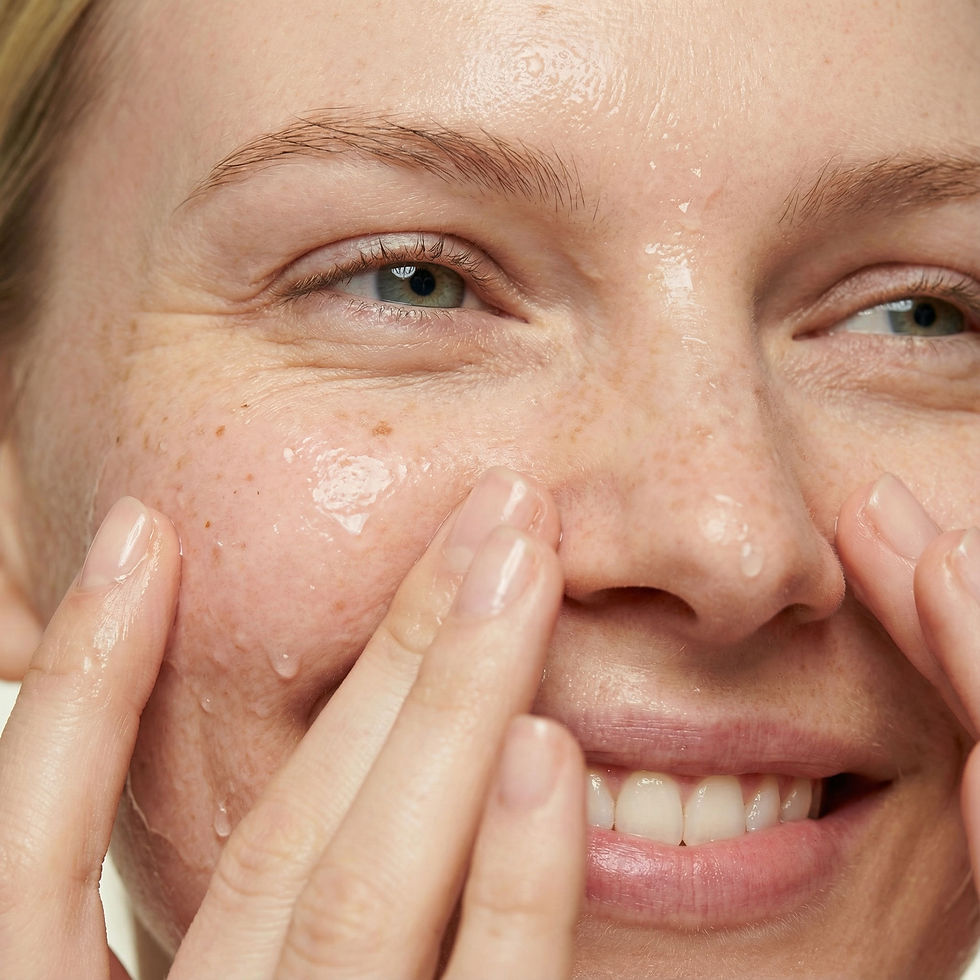
What Does Skin Hydration Actually Mean?
The outermost layer of your skin, the stratum corneum, plays an important role in keeping water in and environmental stressors out. A healthy skin barrier contains a carefully organized mixture of skin cells, lipids and natural moisturizing components that help maintain appropriate water levels.
When too much water escapes from the skin — a process known as transepidermal water loss (TEWL) — the skin can become dry, rough and uncomfortable.
That means good skin hydration is not simply about adding water. It is also about helping the skin retain it.
This is where a well-designed skincare routine can make a difference.
Science Note
Hydration vs. moisturization
The terms are often used interchangeably, but they describe slightly different jobs. Humectants such as glycerin and hyaluronic acid help increase water content in the outer skin, while emollient and occlusive ingredients can help smooth the skin and reduce water loss. A balanced routine often combines these approaches.
Does Drinking More Water Hydrate Your Skin?
Staying adequately hydrated is essential for normal body function — but the relationship between drinking water and visibly hydrated skin is more complicated than skincare advice sometimes suggests.
Research indicates that increasing water intake may modestly improve skin hydration, particularly in people who previously consumed relatively little water. However, the available evidence is limited, and drinking additional water has not been shown to transform dry skin in otherwise adequately hydrated people.
In other words: drink enough water for your overall health, but don’t rely on your water bottle as your only skincare strategy.
Topical skincare and maintaining a healthy skin barrier remain important.
How Hyaluronic Acid Supports Skin Hydration
Hyaluronic acid — also called hyaluronan or HA — is a molecule naturally found throughout the body, including in the skin.
In skincare, hyaluronic acid is primarily valued as a humectant. When incorporated into a well-formulated serum or moisturizer, it can help increase hydration in the outer layers of the skin.
The result?
Skin may temporarily appear:
smoother
softer
plumper
less visibly lined due to dehydration
Clinical studies of topical products containing hyaluronic acid have demonstrated improvements in measures of skin hydration, although results depend on the formulation and the type of hyaluronic acid used.
And there isn't just one type of HA. Hyaluronic acid can be formulated at different molecular weights, which influence how it interacts with the skin.
The Chemistry Journal's Hyaluronic Acid Serum, for example, uses low molecular weight hyaluronic acid alongside humectants including glycerin and propanediol, plus panthenol to support a simple hydration-focused routine.
The Best Way to Use a Hyaluronic Acid Serum
Application matters.
Try applying your hyaluronic acid serum to slightly damp skin, rather than waiting until your face is completely dry. Then follow with your moisturizer.
Why?
A serum containing humectants can help support hydration, while your moisturizer adds complementary ingredients that help keep skin comfortable and limit water loss.
Think of the steps as working together rather than competing with each other:
Cleanse → Hydrating Serum → Moisturizer → Sunscreen (AM)
A hyaluronic acid serum can generally be used both morning and evening and can fit easily alongside many other skincare ingredients.

5 Simple Ways to Help Keep Skin Hydrated
1. Moisturize consistently
Don't stop at your hydrating serum. A moisturizer can help support the skin barrier and reduce moisture loss. Applying moisturizer while the skin is still slightly damp can be particularly useful.
2. Skip very hot water
Long, hot showers can worsen dry skin. Choose lukewarm water and keep showers relatively short, especially if your skin already feels dry or tight.
3. Consider your environment
Cold weather, indoor heating and low humidity can all contribute to dry skin. A humidifier may be helpful when indoor air becomes particularly dry.
4. Keep your routine gentle
More skincare isn't always better. Harsh cleansing, excessive exfoliation or repeatedly introducing strong active ingredients can leave skin feeling dry and irritated. A simple routine built around cleansing, hydration, moisturization and sun protection is often enough.
5. Don't forget sunscreen
Hydration doesn't replace protection. Daily broad-spectrum sunscreen helps protect the skin from UV radiation, which contributes to premature skin aging and skin damage.
Hydrated Skin Is About More Than Water
Healthy-looking skin needs water — but keeping it hydrated involves more than simply drinking more of it.
Your skin barrier, environment, cleansing habits and skincare products all influence how effectively your skin maintains moisture.
Hyaluronic acid can be a useful part of that equation. As a humectant, it helps support hydration in the outer skin and can leave the complexion looking temporarily smoother and plumper. Pair it with a moisturizer, keep your routine gentle, and protect your skin from the sun.
Because when it comes to hydration, the goal isn't to keep adding more and more products. It's to help your skin hold on to what it needs.
References
Verdier-Sévrain S, Bonté F. Skin hydration: a review on its molecular mechanisms. J Cosmet Dermatol. 2007;6(2):75–82. doi:10.1111/j.1473-2165.2007.00300.x. https://pubmed.ncbi.nlm.nih.gov/17524122/
Akdeniz M, Tomova-Simitchieva T, Dobos G, Blume-Peytavi U, Kottner J. Does dietary fluid intake affect skin hydration in healthy humans? A systematic literature review. Skin Res Technol. 2018;24(3):459–465. doi:10.1111/srt.12454. https://pubmed.ncbi.nlm.nih.gov/29392767/
Pavicic T, Gauglitz GG, Lersch P, et al. Efficacy of cream-based novel formulations of hyaluronic acid of different molecular weights in anti-wrinkle treatment. J Drugs Dermatol. 2011;10(9):990–1000. https://pubmed.ncbi.nlm.nih.gov/22052267/
American Academy of Dermatology Association. Dermatologists' top tips for relieving dry skin. American Academy of Dermatology. https://www.aad.org/public/everyday-care/skin-care-basics/dry/dermatologists-tips-relieve-dry-skin


Comments